
NAVAN
This project has received Platinum Recognition by Biodesign Challenge - 2025
How can we redesign water-based ritual offerings in
the context of Kumbh Mela and the Ganges
River
to heal rather than pollute, while respecting their
spiritual and cultural significance?
Story
To millions, the Ganga is not just a river but Ganga Maa, a sacred presence whose waters remain spiritually clean regardless of physical pollution. This creates a paradox: the river is both revered and polluted, and any environmental intervention must respect this belief without implying impurity.
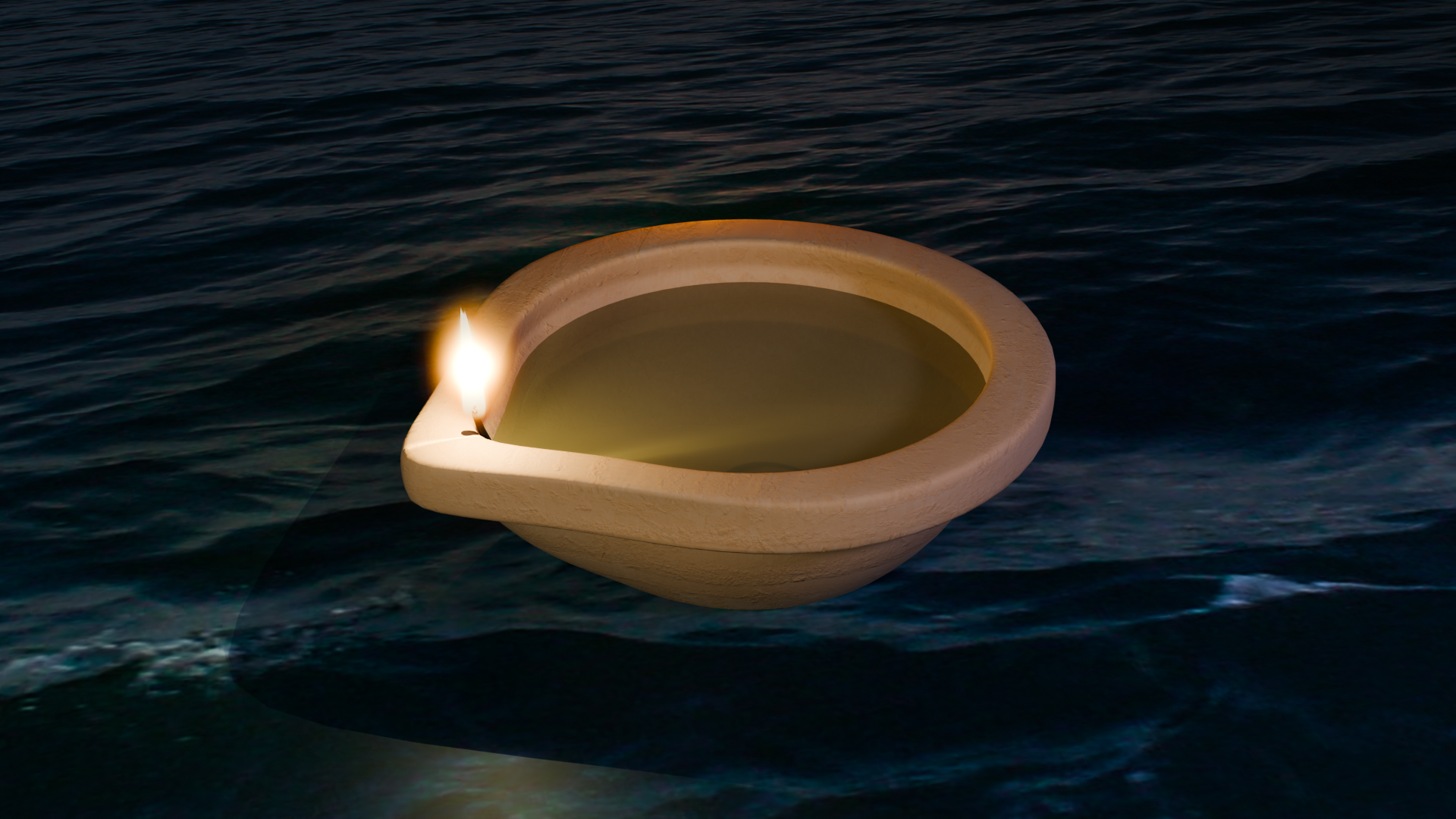
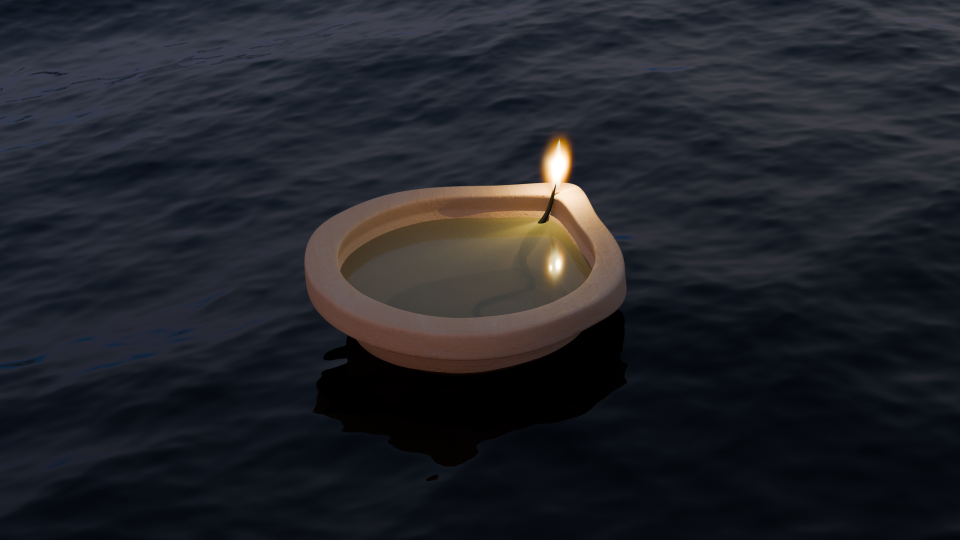
During rituals like Kumbh Mela, diyas are offered as acts of devotion, carrying intentions of gratitude, mourning, surrender, and connection to the divine. Rather than replacing or disrupting this deeply rooted practice, Navan reimagines the diya itself, preserving its meaning while transforming its material impact.
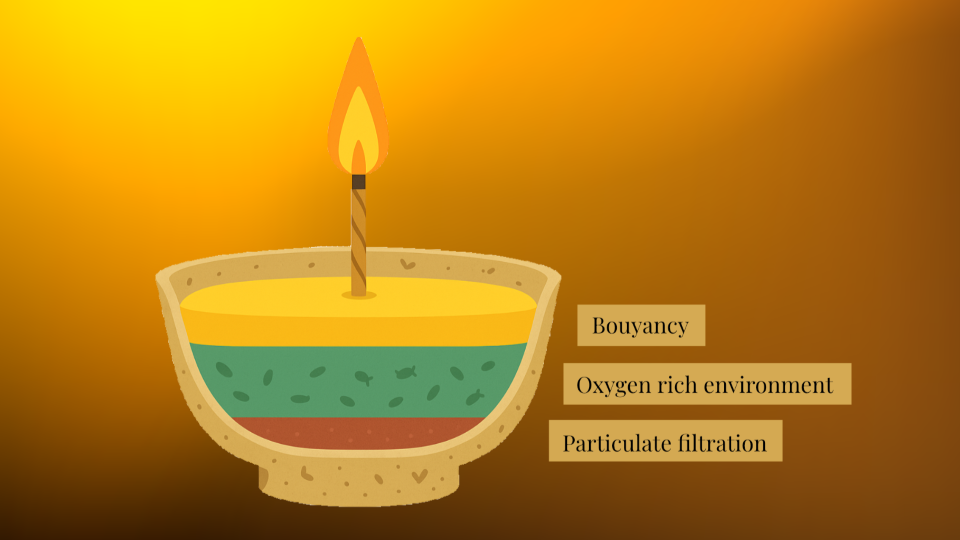
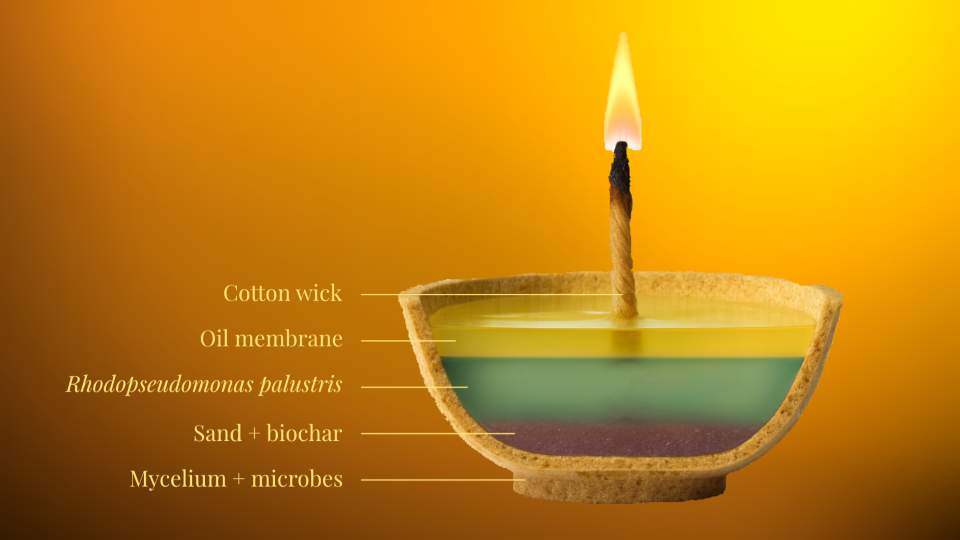
Navan is a biodegradable, living vessel made from mycelium grown on agricultural waste and embedded with dormant local microbes. When the diya is lit, heat activates a layered ecological system: a floating oil layer fuels the flame, while water gradually enters the vessel, rehydrating the microbes. Inside, sand and biochar filter particles and absorb nutrients, while beneficial bacteria contribute to natural purification processes.
Navan is not a fix for the Ganga. It is a respectful gesture: a diya that still holds prayer, memory, and devotion, yet dissolves into the river as nourishment instead of waste.
The journey
Research
We explored our research question through a combination of academic articles and
conversations
with experts and local communities. This provided insights into the pollution and ecology of
the Ganga, the rituals and significance of Kumbh Mela, and the broader context of Hindu
beliefs and existing environmental initiatives.
Development
We translated these insights into early prototypes, initially exploring different ritual
forms before focusing on the diya as our main direction. We consulted experts to identify
suitable materials and organisms that could contribute to waste reduction and ecological
benefit.
- Blender
- Affinity
- Canva
Reflection
Throughout this process, I learned new approaches to addressing complex research questions.
Collaborating with Carolyn brought fresh perspectives, particularly within the field of biodesign.
I also gained a deeper understanding of how to work respectfully within a culture different from my
own, and how to approach material research in a more layered way. Overall, this project strengthened
my skills in biodesign and collaborative practice.
"If water cleanses us, perhaps our offerings can become a way of giving that care back."
- Bio designer - Lieke Kaspers
- Bio designer - Carolyn Fernandes
- Biodesign Challenge